TasNetworks Electrical Professionals Information Hub
At TasNetworks, we are committed to keeping Tasmania's electrical industry informed, connected and up to date with the information that matters most.
The Electrical Contractor Hub is your central source for important TasNetworks updates, industry news, key dates, alerts, consultations and resources relevant to Tasmania's electrical industry.
We are committed to providing timely and practical information to help keep electrical contractors informed and connected. The Hub also provides an opportunity for you to share feedback, ask questions and suggest topics you would like to see covered.
By working together, we can continue to improve communication and ensure the information we provide meets the needs of the electrical industry.
-
Electrical Industry Survey - 2026
 To support TasNetworks working relationship with the Electrical Industry, we undertake an annual satisfaction survey to collect feedback on our servicing, our processes and our performance within the new connection and alterations space.
Your experiences, feedback and guidance will help us better understand how we as a business are supporting the needs of the electrical industry and allow us to consider ways in which we could look to optimise things into the future.
- CLICK HERE TO COMPLETE SURVEY -
As such, we greatly appreciate the time you offer in responding to this survey. It should take no more than 5-10 minutes to complete.
The survey will remain open for feedback until 12am on Sunday 8th November 2026.
Eligible submission completed between 12th October 2026 and 8th November 2026 will be entered into the draw to win one of two $500 Visa gift cards. *Terms and conditions apply.
Your feedback is greatly appreciated.
-
Tiger Tails - Working Near Low Voltage Overhead Service Lines.
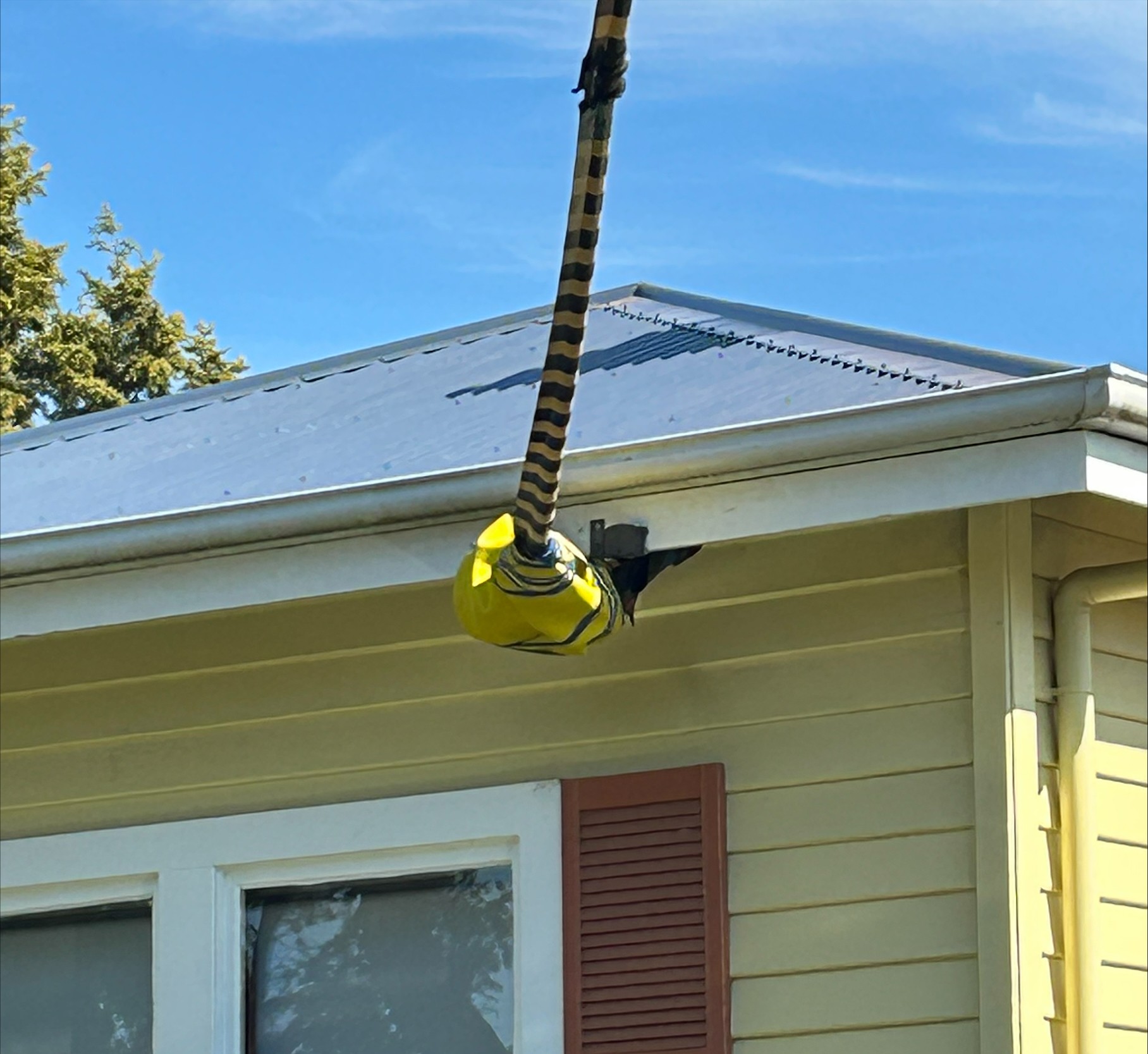 If you are working near low voltage overhead insulated service lines, you may be required to install additional insulation to protect workers, equipment, and the electrical network from accidental contact.
Before commencing work, contractors should review the requirements outlined in Working Near Low Voltage Overhead Insulated Services and ensure appropriate controls are in place.
Requesting Tiger Tails
Zinfra is the authorised service provider for the installation and removal of Tiger Tails on the TasNetworks network.
Please email your requests through to TigerTails@zinfra.com.au
When requesting Tiger Tails, please provide:
- Contact name and phone number
- Address where Tiger Tails are required
- Type of work being undertaken (eg. roofing, painting, scaffolding, or building work)
- Approximate installation date
- Expected duration the Tiger Tails will be required
Zinfra will invoice the requesting party directly for the installation and subsequent removal of Tiger Tails.
To ensure sufficient planning and scheduling, a minimum of two weeks' notice is requested for all Tiger Tail installations.
Alternative contact: 📞 0499 248 142 (If unanswered, please leave a message and your enquiry will be returned).
Additional Information
Existing 10mm Service Lines
Where a property has an existing 10mm low voltage service line that does not meet current standards, Zinfra will first arrange for the service line to be upgraded before Tiger Tails can be installed.
Key points to note:
- Upgrades to non-compliant 10mm service lines will be completed at no cost to the customer.
- If any customer-owned infrastructure requires upgrading, such as a Point of Attachment, Raiser Bracket, or other private electrical assets, these costs will be the responsibility of the customer.
- Any required upgrades to customer-owned infrastructure may affect the overall timeframe for Tiger Tail installation.
If Tiger Tails Cannot Be Installed
In the uncommon event that Zinfra determines Tiger Tails cannot be safely installed at a particular location, the matter will be referred to TasNetworks for further assessment and determination of appropriate controls.
Safety Reminder
Tiger Tails provide a temporary layer of additional insulation and visual protection. They do not make powerlines safe to touch and should never be relied upon as the sole safety control. Always maintain required approach distances and follow all applicable electrical safety requirements when working near overhead electrical assets.
** If there is an immediate safety concern, please contact our fault centre on 132 004 **
-
Industry Reminder: Accessing Current TasNetworks Requirements and Processes

TasNetworks would like to remind all Electrical Professionals that the most current information regarding TasNetworks processes, requirements, standards, and industry updates can be found through TasNetworks Website, the Electrical Professionals Information Hub, and other official TasNetworks communication channels.
From time to time, industry information may be circulated through industry associations, third-party organisations, websites & social media posts. While these communications can be helpful for education purposes, any information relating to TasNetworks' requirements should be verified against current TasNetworks documentation, standards and guidance.
TasNetworks accepts no responsibility for any reliance placed on information obtained from external sources and cannot guarantee its accuracy, completeness, or currency.
To avoid confusion and ensure compliance with current requirements, electricians are encouraged to refer directly to:
- Relevant TasNetworks SIR, technical standards and procedures
- TasNetworks Electrical Professionals Information Hub
- Applicable legislation, rules, and regulatory requirements
- Official communications issued by TasNetworks
TasNetworks remains committed to providing clear, accurate, and up-to-date information to support the electrical industry. We welcome feedback and suggestions for improvement opportunities; please email EC.Communications@tasnetworks.com.au
-
Changes to the Technical Advice Process
We would like to advise of an upcoming change to our Technical Advice service.
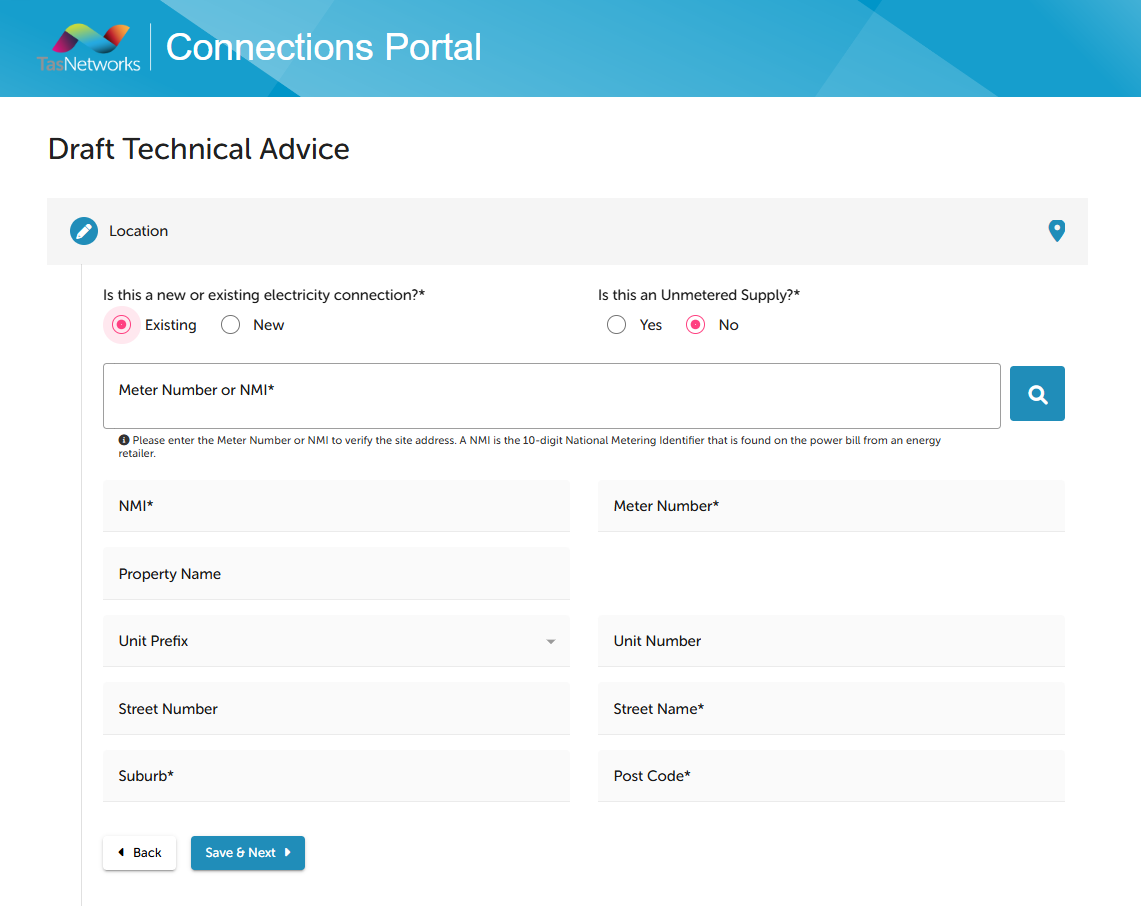
From the New Year, the Technical Advice Phone Line will be discontinued. All Technical Advice enquiries will need to be submitted through the Connections Portal (the same portal used for EWR and Application submissions).
We recognise this is a significant change for the industry and may take some adjustment. However, we believe this new process will deliver a fairer, more efficient service and support more timely responses.
________________________________________
📢 Why Not Start Now?
While this change will not take effect until the New Year, we encourage you to begin submitting Technical Advice enquiries through the Connections Portal now.
This will give you time to get comfortable with the new process and help ensure a seamless transition when all Technical Advice requests move online.
If you need additional support – there are work Instructions available here.
________________________________________
✅ Benefits of the new process
- Allows Technical Advice (TA) to investigate your enquiry before contacting you, resulting in more informed responses and potentially saving time overall.
- Provides responses in writing, ensuring that all advice and recommendations are documented in one place for your records.
- Ensures all relevant information is provided upfront, helping us assess your request more accurately.
- Improves visibility across the business, enabling teams including Customer Service Centre, Connection Services, Scheduling, and Service Connections to access and understand your case.
- Provides the ability to attach supporting documentation, including:
- Photos
- Site plans
- Drawings
- Any other information required for assessment
- Provides valuable insights into common enquiries, helping us identify opportunities to improve our Service and Installation Rules (SIR) and deliver additional industry education where needed.
________________________________________
Important Reminder
** If there is an immediate safety concern, please contact our fault centre on 132 004 **
To avoid delays, please ensure you submit your enquiry as early as possible and include all relevant and accurate information.
Incomplete submissions may delay our response and could prevent Technical Advice from providing the correct guidance required to ensure your connection proceeds successfully.
________________________________________
What this means for you:
From the New Year, all Technical Advice requests must be lodged via the Connections Portal. Phone-based Technical Advice enquiries will no longer be available
-
Regulated Distribution Pricing for 2026/2027 is now Available
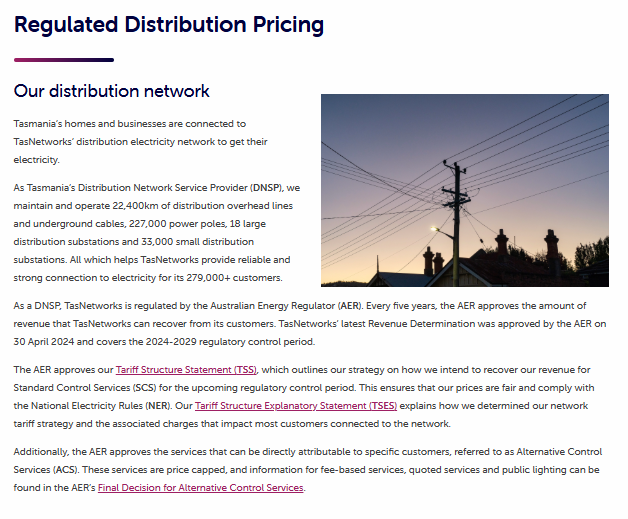 The AER has now approved the application guides for the 2026-2027 regulatory control period.
The main documents commonly referenced by the Electrical industry are Alternative Control Services (ACS) particularly.
- 2026-27 Ancillary Services - Fee Based Services Application and Price Guide
- 2026-27 Ancillary Services - Quoted Services Application and Price Guide
The documentation for these services plus Standard Control Services (SCS), Negotiated Services Framework and Connections Policy has been published on the 'Regulated Distribution Pricing' page on TasNetworks website.
-
Technician Details on Electrical Work Request (EWR)
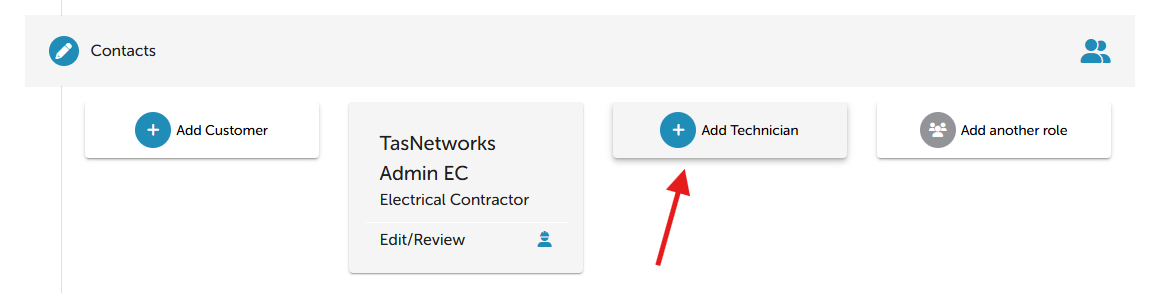
When submitting an EWR you have an option to include the Technician contact information.
The Technician should be the person most familiar with the job and site. They will act as the primary point of contact for TasNetworks throughout the connection process for that job where required.
The Technician will then be the first point of contact for;
- any queries related to submitted paperwork
- TasNetworks scheduling team when arranging site “tee-ups”.
If a technician isn’t provided, or they are unavailable, we will contact the Electrical Contractor instead.
Approval letters and general correspondence will be sent to all contacts listed on the case, including the Customer, Electrical Contractor, Technician, Developer, and any other nominated contacts.
-
Network Capacity Map - Now Available
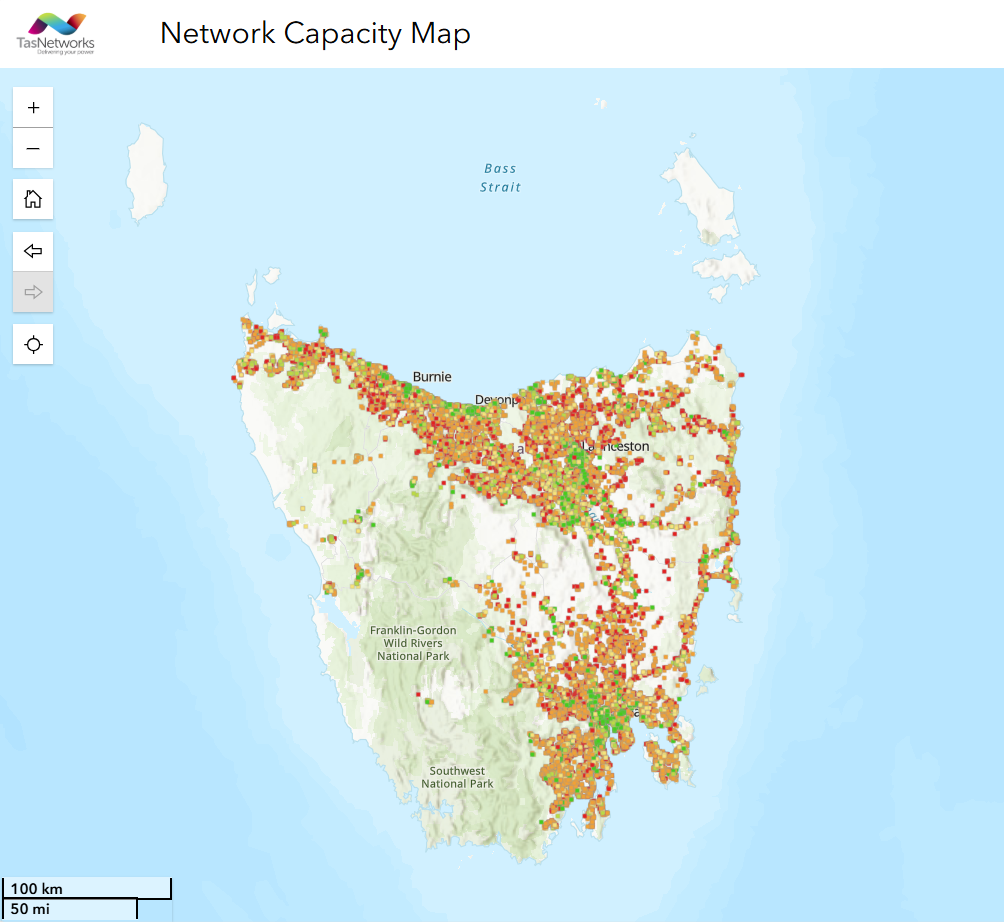 We’re pleased to let you know that TasNetworks new Distribution Network Capacity Map is now live and ready for you to use.
This map is a simple online tool that shows where there’s likely to be space on our distribution electricity network for medium to large new connections, including EV Chargers or extra demand from new developments.
It’s designed to help you get a quick idea of what might be possible in your area before you start planning a project or reach out to us.
You can access the map directly here: Distribution Network Capacity Map
You can access the user guide here: Distribution Network Capacity Map - User Guide
More information about Electric Vehicles is available here: Electric Vehicles – TasNetworks
How the map can help you
- See where there’s likely to be room for new connections to the network.
- Check for areas that might have network constraints or limited capacity.
- Get a head start on planning, whether you’re thinking about a new development, a renewable energy project, or just want to understand your local network better.
- Save time by narrowing down the best locations for your project before making a formal enquiry.
A few things to keep in mind
- The map is a guide only. It shows general, up-to-date information, but actual capacity can change, and some details might not be shown. Capacity can be constrained at multiple levels; these constraints can be complex and must be analysed in detail when you submit an application or through early engagement.
- If you’re interested in a specific site or need a detailed assessment, please contact our team. We’re here to help and can provide more accurate information for your project.
- Using the map early in your planning can help avoid surprises and make the connection process smoother.
-
Removal of Paper-Based Application Forms - 1 July, 2026
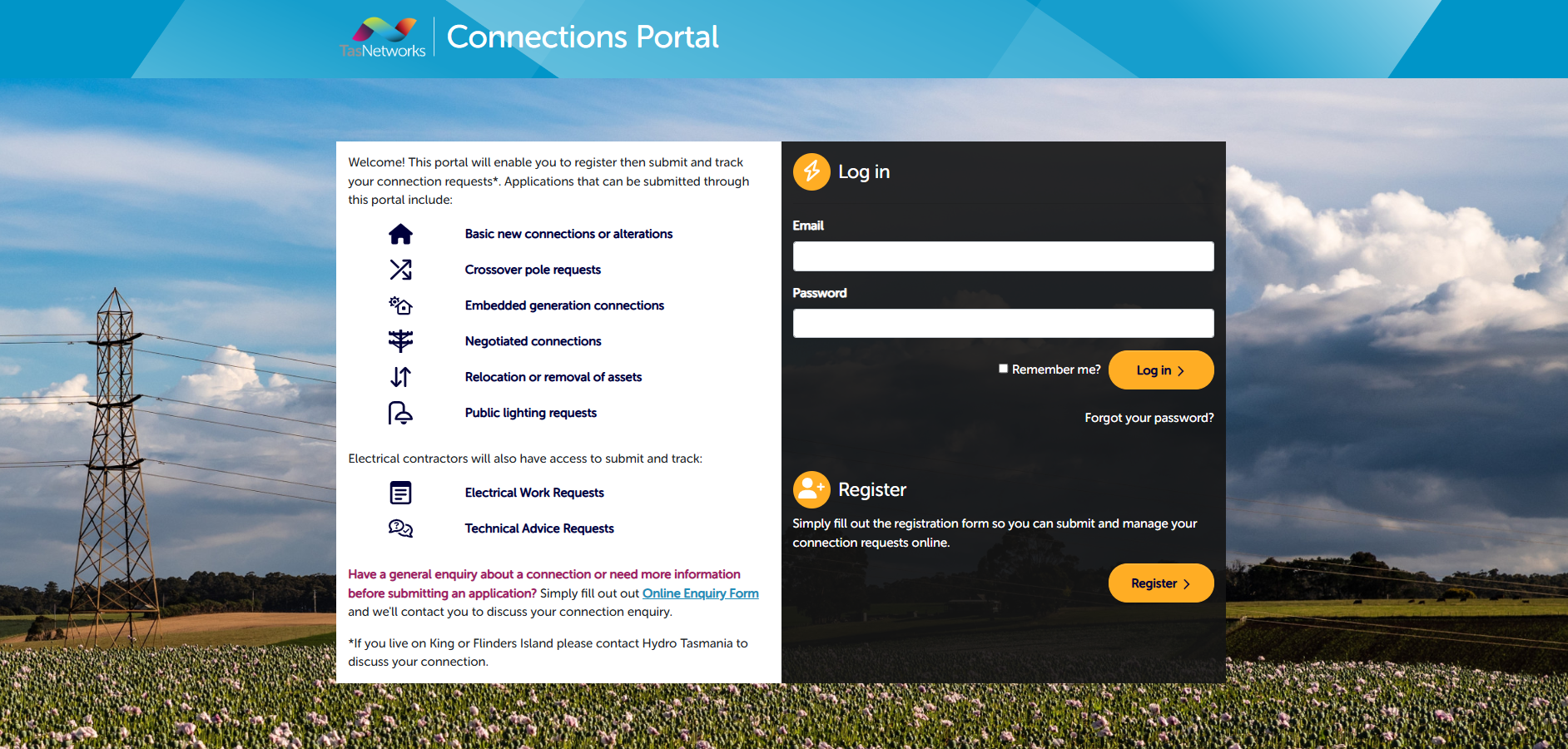 The TasNetworks’ Connection Portal has been in place for approximately five years to support the submission of connection applications and electrical works requests. During this time, paper-based applications via forms on our website have also been accepted.
From 1 July, these paper-based forms will be removed and can no longer be used to submit applications. All submissions must be made through the Connection Portal.
If you require assistance with registering for the portal or submitting an application, please contact us on 1300 137 008.
-
BYDA Registration Fee – 1 July, 2026
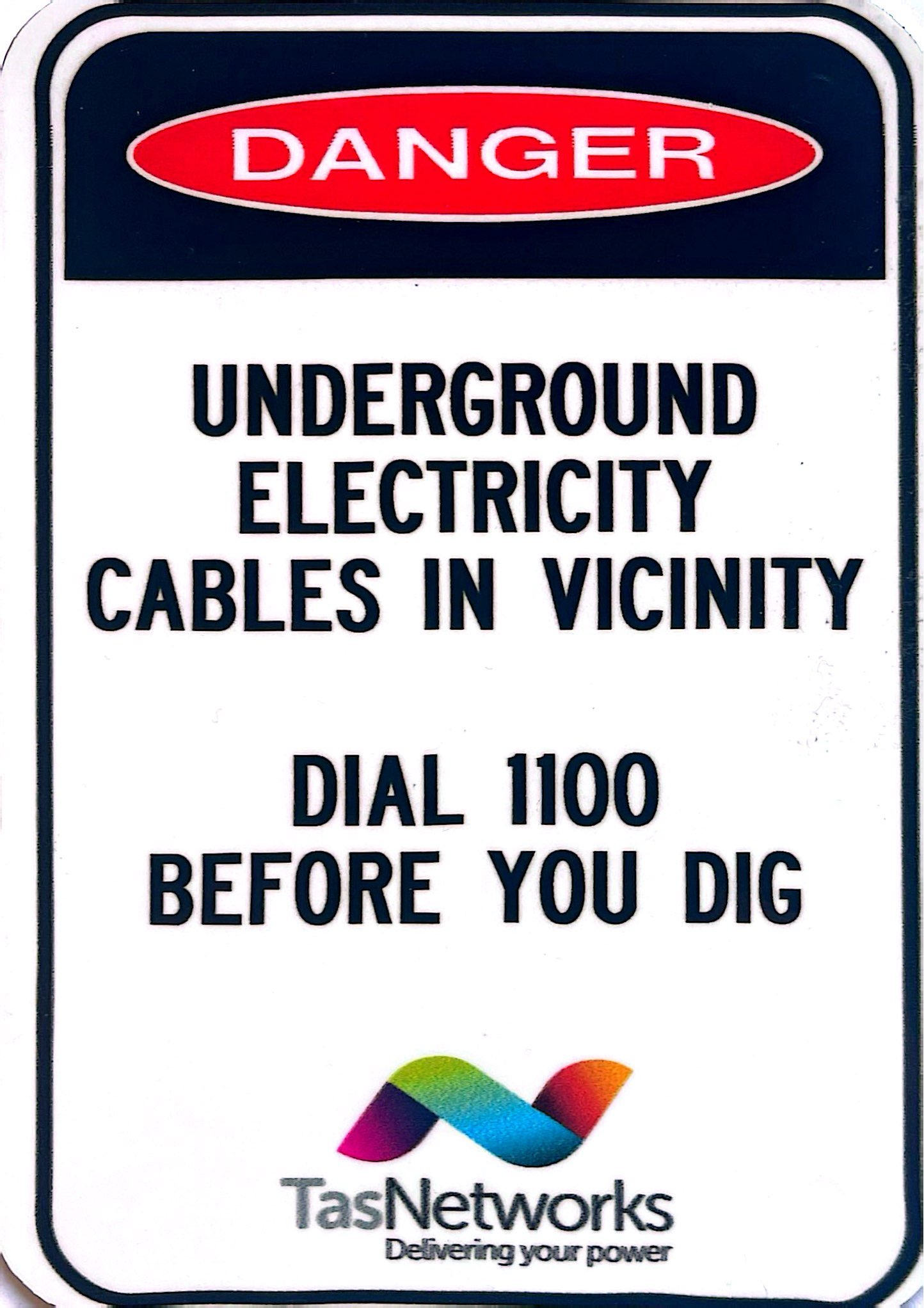
Following approval of the AER ringfencing waiver, TasNetworks will commence charging for Before You Dig Australia (BYDA) registrations for all connections of Private Underground Consumer Mains to TasNetworks poles from 1 July 2026. This will apply for EWRs submitted on or after this date.
An administration fee of $62.65 (exc. GST - for financial year 26/27) will apply. This fee will typically be charged via the customer’s retailer and will appear on their electricity bill.
It is important to remember:
-
Landowner approval (eg. Council, State Growth etc.) is still required, and evidence must be submitted at the application stage.
- In some cases, landowners may not approve these connections so ensure you obtain these approvals BEFORE commencing any work onsite.
-
The TasNetworks BYDA Template must be completed in full and submitted with the EWR once all work onsite has been completed.
- Only the TasNetworks BYDA Template will be accepted

- You can find examples of our BYDA information requirements here
- TasNetworks registers the private asset from TasNetworks pole to the Boundary
- Only the TasNetworks BYDA Template will be accepted
- Customers will continue to own the private consumer mains and following faults, TasNetworks will make safe as required and communicate that it will be the customer's responsibility to address any further repairs.
-
Landowner approval (eg. Council, State Growth etc.) is still required, and evidence must be submitted at the application stage.
-
TasNetworks is seeking industry feedback - register your interest by COB 13/03/26
 TasNetworks is seeking industry participants for an online forum to engage on TasNetworks services for the next regulatory control period, 2029-2034. This includes specific engagement on an Accredited Service Provider (ASP) scheme. Engagement will all be done online with a survey also available for those that are unable to attend.
Please register your interest via email to revenue.reset@tasnetworks.com.au by close of business 13/03/2026. Any questions and/or comments can also be directed to the same email address.
-
 Working near low voltage overhead insulated services (1.6 MB) (pdf)
-
BYDA - Requirements and Examples
-
BYDA - Blank Template
-
Online Tech Advice Request - Work Instructions (597 KB) (pdf)
-
Network Tariff Information Sheet - Electrical Professionals.pdf (158 KB) (pdf)
-
Tyree Kiosks (262 KB) (pdf)
-
Saddle Fit - Example (47.3 KB) (jpg)
-
SIR Version 8.5 Fact Sheet.pdf (286 KB) (pdf)
-
SIR Version 8.4 - Change Fact Sheet (896 KB) (pdf)
-
Electrical Industry 2026 Survey- Prize Draw Terms and Conditions.pdf (220 KB) (pdf)